
Deepavali in Singapore 2026
Deepavali Singapore 2026 falls on Sunday, 8 November and is one of the country’s 11 gazetted public holidays. Because it lands on a Sunday, employees on a five-day work week get Monday, 9 November as the in-lieu replacement day off, turning the weekend into a three-day break.
Deepavali falls on Sunday, 8 November 2026 in Singapore. Because it lands on a Sunday, Monday, 9 November 2026 is gazetted as the replacement public holiday — that’s the day most offices, schools and banks will actually be closed.
Next occurrence. The next Deepavali public holiday is Sunday 8 November 2026, with Monday 9 November gazetted as the holiday in lieu — a three-day weekend. After that it moves to Thursday 28 October 2027, and Tuesday 17 October in 2028.
Deepavali Singapore 2026: Quick Facts
| Date | Sunday, 8 November 2026 |
| Replacement holiday | Monday, 9 November 2026 |
| Also known as | Diwali, Festival of Lights |
| Type | Gazetted public holiday (Employment Act) |
| Little India Light-Up | 10 October – 8 November 2026 |
What Deepavali Marks
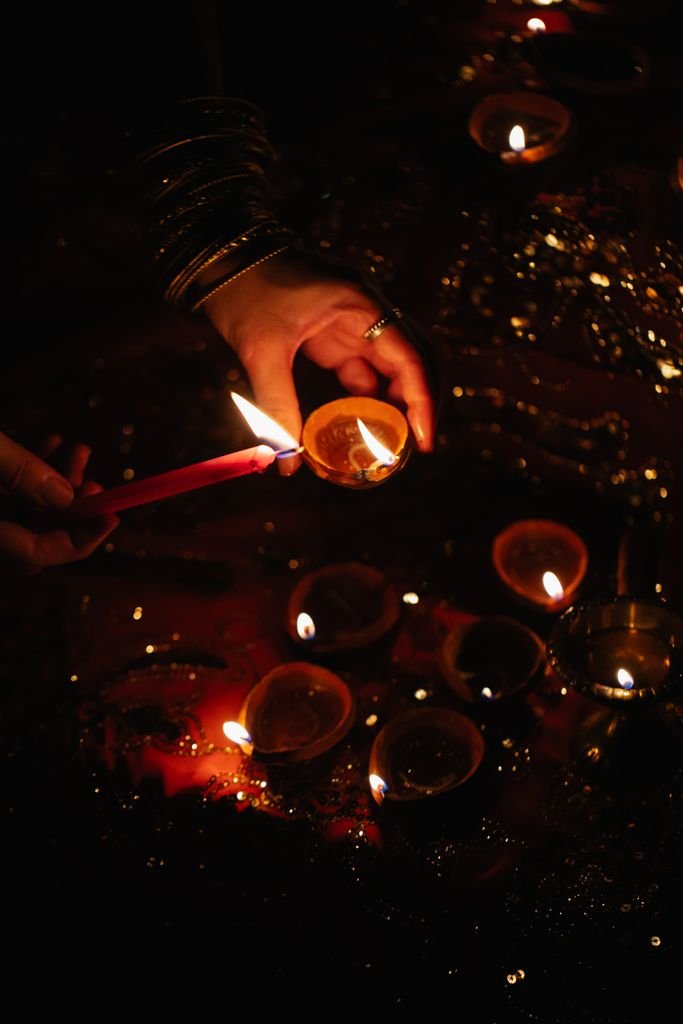
Deepavali, also called Diwali or the Festival of Lights, is one of the most significant festivals for Singapore’s Hindu community. It celebrates the victory of light over darkness and good over evil, marked with oil lamps, prayers at temples, family visits, and festive sweets. Like Hari Raya and Christmas, it’s gazetted as a public holiday for everyone in Singapore, not only those who observe it.
The Stories Behind Deepavali
Ask three families why they celebrate Deepavali and you may hear three different stories. In the South Indian tradition followed by most Hindus in Singapore, the festival marks Lord Krishna’s victory over the demon king Narakasura, which is why the day is also known as Naraka Chaturdashi and why the pre-dawn oil bath matters so much. In North India, Diwali celebrates Lord Rama’s return to Ayodhya after fourteen years of exile, with lamps lit to guide him home. Many families also pray to Lakshmi, the goddess of wealth and prosperity, on the night itself.
The details differ, but the meaning is shared: light over darkness, and good over evil. Sikhs and Jains also mark the same season for their own reasons, so the festival reaches well beyond the Hindu community.
Turning It Into a Long Weekend
No leave application needed for the basic version: Saturday 7, Sunday 8 (Deepavali) and Monday 9 November (replacement holiday) already give most Monday-to-Friday workers a 3-day weekend. Taking a single day of annual leave on Friday, 6 November stretches that into a 4-day break.
Pay Rules If You Work That Day
Employees covered by the Employment Act who are required to work on the gazetted public holiday (Monday 9 November, in this case) are generally entitled to an extra day’s salary at the basic rate, in addition to their usual gross pay for that day. Some employers offer an agreed day off in lieu instead — check your contract or HR policy for which applies.
Little India Light-Up 2026
The street light-up along Campbell Lane and Serangoon Road runs from 10 October to 8 November 2026, with a festive street bazaar on 10 October selling traditional costumes and trinkets, plus cultural performances through the season. Admission is free.
What’s Open and What’s Closed
Government offices, banks and schools are closed on the replacement holiday, Monday 9 November. Malls, restaurants and attractions generally stay open — Little India itself is busiest during the light-up period, with heavier foot traffic and tighter parking near Serangoon Road.
How Deepavali Is Observed in Singapore Homes
The public face of Deepavali is Little India lit up for a month. The actual observance starts much earlier and much quieter, in the house.
Preparation begins days ahead with a thorough spring clean — the belief being that Lakshmi, the goddess of prosperity, will not enter an untidy home. Doorways are decorated with a kolam, a geometric pattern drawn in coloured rice flour or powder on the floor at the entrance. Traditionally it is redrawn each morning, and in HDB blocks you will often see several along a single corridor in the week before the festival.
On the day itself, many families rise before dawn for the oil bath — sesame oil worked into the scalp and hair before washing, marking a ritual cleansing. New clothes are worn, prayers are offered at the home altar, and the day continues with visits to relatives. Oil lamps, diyas, are lit at the entrance and around the home at dusk; the name Deepavali comes from the Sanskrit for “row of lights”.
Sweets and savouries are central and mostly made or bought in advance: murukku, laddu, athirasam, mysore pak. Visitors are expected to eat. Refusing outright is awkward — take a little, even if you are full.
Where to Go: Temples and Little India
Sri Veeramakaliamman Temple, Serangoon Road. The heart of Little India and the busiest temple on the day. Prayers run from very early morning, and the queue can stretch well down the street by mid-morning.
Sri Mariamman Temple, South Bridge Road. The oldest Hindu temple in Singapore and a national monument. Quieter than Little India, and the gopuram tower alone is worth the visit.
Sri Srinivasa Perumal Temple, Serangoon Road. A national monument dedicated to Vishnu, and the starting point for the Thaipusam procession earlier in the year.
The Deepavali Festival Village at Campbell Lane runs for several weeks before the festival, with stalls selling garlands, decorations, sweets, saris and gold. It is the best place to see the preparation rather than just the result — go on a weekday evening if you want to move at all.
Practical notes for visitors: Little India becomes extremely crowded on the weekends leading up to the festival, and parts of Serangoon Road are closed to traffic. Take the MRT to Little India or Farrer Park rather than driving. Inside temples, remove your shoes, dress modestly with shoulders and knees covered, and ask before photographing worshippers. Non-Hindus are welcome at all of these temples.
Theemithi and the Silver Chariot Procession
About a week before Deepavali, Sri Mariamman Temple on South Bridge Road holds Theemithi, the fire-walking festival. After weeks of fasting and prayer, male devotees walk barefoot across a pit of glowing embers in honour of the goddess Draupadi, while women devotees take part through prayer. In the lead-up, a silver chariot carrying the deity is drawn through the streets from Sri Srinivasa Perumal Temple in Little India to Sri Mariamman Temple in Chinatown.
Both are free to watch, but they draw large crowds, so arrive early, keep to the areas set aside for spectators and follow the marshals’ instructions.
Deepavali Greetings
“Happy Deepavali” always works. To greet Tamil friends in their own language, say “Iniya Deepavali nalvazhthukkal”, meaning warm Deepavali wishes. You will also see “Selamat Hari Deepavali”, the Malay greeting, on banners and cards across Singapore.
Why the Date Changes Every Year
Deepavali falls around the new moon (amavasya) in the Tamil month of Aippasi, a lunar month that drifts against the Gregorian calendar. That is why it moves between mid-October and mid-November: 8 November in 2026, 28 October in 2027, and an estimated 17 October in 2028.
In Singapore the gazetted date follows the South Indian Tamil reckoning, which is why the local date occasionally differs by a day from North Indian calendars or from Diwali dates published overseas. If relatives abroad are celebrating on a different day, neither calendar is wrong — they are simply different traditions within the same festival.
Deepavali 2027: Thursday 28 October
Next year Deepavali moves about eleven days earlier, to Thursday 28 October 2027. Because it falls midweek there is no holiday in lieu, but one day of annual leave on Friday 29 October gives a four-day weekend from Thursday to Sunday.
The Little India light-up usually switches on about four weeks before the festival, so expect it from around late September or early October 2027, with the busiest shopping weekends in mid-October. Theemithi will also move earlier, to the week or so before 28 October. MOM has already confirmed the date in its official 2027 public holiday list.
FAQ
Is Deepavali a public holiday in Singapore in 2026?
Yes. It falls on Sunday, 8 November 2026, and because it lands on a Sunday, Monday, 9 November 2026 is gazetted as the replacement public holiday.
Why is the holiday on a Monday this year?
Deepavali itself is Sunday, 8 November. MOM gazettes the next working day as a replacement whenever a public holiday falls on a Sunday, so Monday, 9 November is the actual day off for most workers.
Do I get a long weekend for Deepavali 2026?
Yes, automatically. Saturday 7, Sunday 8 (Deepavali) and Monday 9 November (replacement holiday) form a 3-day weekend with no annual leave needed. Taking Friday 6 November off extends it to four days.
What happens if I have to work on Deepavali or its replacement day?
Under the Employment Act, an employee required to work on the gazetted public holiday is generally entitled to an extra day’s salary at the basic rate, on top of the usual gross pay for that day.
What is the Little India Light-Up?
An annual street illumination and festive bazaar along Campbell Lane and Serangoon Road. In 2026 it runs from 10 October to 8 November, with a street bazaar on 10 October and free admission.
Do non-Hindus get the day off too?
Yes. Like all gazetted public holidays in Singapore, Deepavali applies to every employee regardless of race or religion.
Is Deepavali the same as Diwali?
Yes. Deepavali and Diwali refer to the same festival — Deepavali is the Tamil name and is the term commonly used in Singapore and Malaysia, while Diwali is the more widely known Hindi/North Indian name used across much of India and internationally.
Why does Deepavali fall on a different date every year?
Deepavali follows the Hindu lunisolar calendar and is set by the position of the moon, typically falling on the 15th day (amavasya, the new moon) of the Tamil month of Aippasi. Because it tracks the lunar cycle rather than the fixed Gregorian calendar, the date shifts each year, usually landing somewhere between mid-October and mid-November. MOM confirms the exact date for each year closer to the time.
Do MRT trains and buses run on Deepavali?
Yes, public transport operates as usual on both Deepavali and its replacement holiday, though services around Little India and Serangoon Road can be busier than normal during the light-up period. Check operator announcements for any timing changes if you’re travelling late at night.
Can non-Hindus visit temples on Deepavali?
Yes, and visitors are genuinely welcome. Remove your footwear before entering, dress modestly, keep to the edges of the prayer hall if a ceremony is in progress, and ask before taking photographs of people. Expect long queues at the Little India temples in the morning; late afternoon is considerably calmer.
What is a kolam and why is it drawn at the doorway?
A kolam is a geometric pattern drawn on the floor at the entrance of a home using coloured rice flour or powder. It is both a welcome and an offering — traditionally made with rice flour so that ants and birds could feed on it. During Deepavali the designs become larger and more elaborate, and you will see them outside HDB flats throughout the week.
What should I bring if I am invited to a Deepavali open house?
Sweets, fruit or a box of pastries are always appropriate. Avoid anything containing beef, and check before bringing alcohol, as many Hindu households do not serve it. Flowers are welcome. If you are visiting a home with children, small gifts or sweets for them are a nice touch but not expected.
Is Little India worth visiting on Deepavali day itself?
The light-up is at its best, but the day itself is when families are at temple or at home, so the street atmosphere is actually quieter than the weekends before. If you want the bustle of the Festival Village and the shopping, go in the two or three weeks leading up. If you want the lights without the crush, the evening of the day itself is a good choice.
Do buses and MRT run normally on Deepavali?
Yes. Public transport operates on its usual public holiday schedule, and services to Little India are often enhanced in the evenings during the light-up period. Road closures around Serangoon Road are the main disruption, so avoid driving into the area entirely.
The Last Holiday of the Year
Christmas Day on Friday 25 December 2026 is the only gazetted holiday left after Deepavali. Because it falls on a Friday, no off-in-lieu applies and most employees get a three-day weekend automatically. The 2026 public holiday calendar lists every remaining date, and if you are planning next year’s leave, Deepavali moves to Thursday 28 October under the confirmed 2027 dates.
Dates verified against the official MOM 2026 gazette, current as of September 2026.
Related Pages
- Full Singapore Public Holidays 2026 guide
- Printable Singapore public holidays 2026 calendar
- Vesak Day Singapore — another 2026 holiday with a Sunday replacement day
Thaipusam is the best known example of a major festival that is not gazetted. We cover it and the rest in our guide to days that are not a public holiday in Singapore.
Sources: Every date on this page is checked against the Ministry of Manpower’s official public holiday list, and updated the same week MOM publishes or revises a date.
Deepavali closes the festival calendar before Christmas Day and, a few weeks later, Chinese New Year.
Last updated 26 October 2026.